How to Buy an Apartment in NYC: 8 Steps That Matter
Back to the NYC Real Estate Blog
To buy an apartment in NYC: get a real mortgage pre-approval, decide whether you want a co-op or a condo, hire a New York real estate attorney, make an offer, sign a contract with a 10% deposit, pass the board, and close. Budget 2% to 5% of the price for closing costs.
Most of our clients are buying an apartment, not a house, and the apartment version of this process has two extra moving parts: the co-op board and the New York attorney. CFPB’s own homebuying guide covers the national version; here are the eight NYC-specific steps that determine whether it goes smoothly.
| Step | Rough timing |
|---|---|
| Pre-approval to accepted offer | Before you tour, then days to weeks |
| Contract signed with a 10% deposit | 1 to 2 weeks after the offer |
| Mortgage commitment letter | 30 to 45 days |
| Board package for approval (co-op only) | 3 to 6 weeks |
| Closing | 60 to 90 days from the accepted offer |
Step 1: Get a real pre-approval
A prequalification is a lender being polite; a pre-approval is a lender committing. A prequalification is a five-minute phone estimate. A pre-approval means the bank has reviewed your income, assets, and credit and will lend you a specified amount.
Sellers and co-op boards take a pre-approval seriously and ignore a prequalification. Get one before you tour, so your offer is credible on day one. Our buying process guide has the full timeline.
Step 2: Decide on a co-op or condo
Most NYC apartments for sale are co-ops. The choice shapes everything after it. One asks your accountant to dinner; the other asks your lawyer a few questions.
- Co-op: you buy shares in a corporation and get a lease. Cheaper to buy and close, often 20% or more down plus post-closing liquidity, and a board that can reject you.
- Condo: you get a deed. More expensive to buy and close, more flexible financing, and only a right of first refusal, which boards rarely use.
A co-op is cheaper to close, and a rebate stacks on top of that. Our post on what NestApple returns to buyers shows the number. If you’re still weighing whether to buy at all, our rent vs buy in NYC post runs the math.
Step 3: Hire a New York attorney
In New York, the purchase contract is drafted and negotiated by lawyers. Retain one as soon as your offer is accepted. Either the agent hands the contract to a lawyer or does something they shouldn’t, because only an attorney can practice law.
Our post on when to hire a real estate attorney covers what they do and what they cost, roughly $2,000 to $4,000 as a flat fee.
Step 4: The offer and the 10% deposit
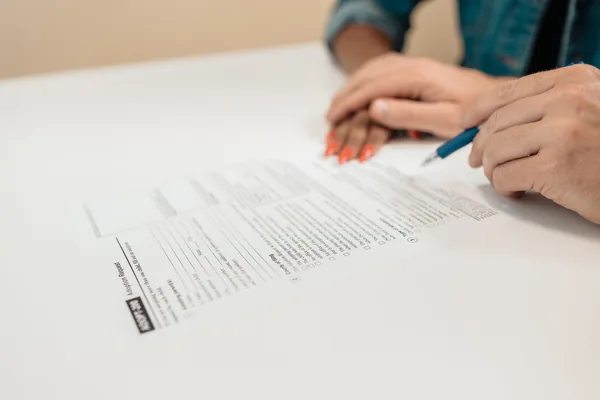
An accepted offer here is a handshake with homework. Nothing binds until both sides sign the contract. When you sign, you wire 10% of the purchase price into the seller’s attorney’s escrow account, and after closing, that deposit is at risk if you walk without a contingency.
Keep a financing contingency unless a bidding war forces you to drop it. Our list of buyer mistakes covers what happens when people skip it.
Step 5: The board package and interview
For a co-op, the board package is a financial confession with a photo section. It’s a thick application: tax returns, bank statements, reference letters, a personal statement, and the full deal terms. Management and the board review it, then invite you to an interview.
The interview is usually a formality if the package is strong. Assemble the package carefully and honestly, because a board that catches an inconsistency can simply say no without giving a reason. A condo skips this and just needs a waiver of the right of first refusal.
Step 6: Closing costs and the mansion tax
Budget 2% to 5% of the price, higher for a condo, lower for a co-op. The buyer pays the mansion tax, starting at 1% on a $1,000,000 purchase and increasing in brackets above that. A condo also has title insurance and the mortgage recording tax.
A co-op has neither. That’s the co-op’s one financial mercy, and it’s why a co-op closes cheaper. Run your exact number on the closing cost calculators, with a rebate applied.
Step 7: Financing, appraisal, commitment
After you’re under contract, complete the full mortgage application. The lender orders an appraisal and, 30 to 45 days later, issues a commitment letter. A co-op building can cap how much you’re allowed to borrow, so the building gets a vote on your mortgage too. Confirm the building’s financing limit before you assume 80%.
Step 8: Walk-through and close
The day before or the morning of closing, do a final walk-through to confirm the apartment is in the agreed condition and empty. This is the one time it pays to be picky about a light switch, because after closing, every repair is yours. Then everyone meets, you wire the balance, the attorneys handle the transfer, and you get the keys.
What do we do for a client buying an apartment?
The search is the fun part, so we take the other parts. We pull the building’s financials, run the comparable sales, negotiate the price, coordinate with your attorney, and help assemble the board package.
And we rebate part of our commission to you at closing. Georges describes the model in plain arithmetic: on a $1 million deal at 3% to the buyer’s side, “from those 30k we keep 10, we give back 20.” That’s about $22,000 on the average deal, your money back on a purchase you were making anyway.
Common questions
How much money do I need to buy an apartment in NYC? The down payment plus 2% to 5% of the price in closing costs. A co-op often requires 20% or more down and post-closing liquidity of 1 to 2 years of payments; a condo often requires 10% to 20%.
How long does it take to buy an apartment in NYC? About 60 to 90 days from the accepted offer to closing. A condo can be faster; a co-op is slower because of the board package and interview.
Do I need an attorney to buy an apartment in NYC? In practice, yes. New York deals are done by attorneys, who draft and negotiate the contract, review the building, and run the closing.
What is the hardest part of buying a co-op? The board. A strong, honest package usually clears it, but the board can reject you without giving a reason, so the application has to be right.




Nicole Fishman Benoliel co-founded NestApple in 2017. She's a lawyer admitted to the New York bar - her law degree is from La Escuela Libre de Derecho in Costa Rica, with further study at IE Business School in Madrid and an LLM from Fordham in New York. She does not act in a legal capacity at NestApple; every client is referred to an attorney who handles real estate deals full time.