How to Find a Rent-Stabilized Apartment in NYC (2025-2026)
Go Back To Previous PageNew York City is one of the most expensive cities in the world, which makes a rent-stabilized apartment something of the holy grail of city living — a unit where annual rent increases are capped by law rather than set by the market. Despite their fabled status, they’re common: roughly 960,600 rent-stabilized apartments exist citywide, nearly half of all NYC rental units, per the 2023 NYC Housing and Vacancy Survey. Here’s how to actually find one, and how rent stabilization differs from the much smaller, shrinking category of rent control.
Rent-Stabilized vs. Rent-Controlled: What’s the Difference?
The 40-60 word answer: Rent stabilization covers roughly 960,600 units and is an active, renewing category — units turn over and get re-rented every year.
Rent control covers only about 24,000 units citywide, a pool nearly 40 times smaller, and is a closed legacy category: the same tenant (or a qualifying family successor) has lived there continuously since around 1971, and no new units ever enter it.
| Rent Stabilized | Rent Controlled | |
|---|---|---|
| Approx. units citywide | ~960,600 | ~24,000 |
| Typical building | 6+ units, built before 1974 (or newer with a tax abatement) | Built before 1947 |
| Can a new renter find one? | Yes — units actively turn over | No — tenant must have lived there continuously since ~1971 |
| Category growing or shrinking? | Stable/active | Shrinking by attrition only |
In practice, this means rent control isn’t something you can search for — it’s a legacy status tied to one specific long-term tenant, and it converts to rent-stabilized (if the building qualifies) or market rate once that tenant is gone. Everything below is about finding a rent-stabilized unit, the category you can actually target.
The Current NYC Rent-Stabilization Increase
The 40-60 word answer: For leases starting October 1, 2025, through September 30, 2026, the NYC Rent Guidelines Board voted 5-4 on June 30, 2025, to allow a 3.0% increase on 1-year lease renewals and 4.5% on 2-year renewals (2.75% the first year, 1.75% the second) — the legal cap landlords can charge existing stabilized tenants.
This is exactly the mechanism that keeps stabilized rent increases predictable and far below market-rate jumps, and it’s set annually by the RGB, so it’s worth checking the current year’s order before signing or renewing.
How to Find a Rent-Stabilized Apartment in NYC
Request DHCR Rent History
The most reliable way to confirm a specific unit’s status is to request its rent history directly from DHCR — free, and it shows every legally registered rent since 1984 along with current stabilization status. Email rentinfo@nyshcr.org with the building address, unit number, and zip code, or submit the request online at hcr.ny.gov. This beats guessing from a building-wide list, since it confirms the specific unit, not just the building.
Check the RGB’s Building Lists and DHCR’s Address Search
The Rent Guidelines Board publishes lists of buildings registered with DHCR by borough, and DHCR’s building search lets you look up a specific address. Useful as a first screen, but neither tool tells you which individual units within a qualifying building remain stabilized — a building-level match doesn’t guarantee the specific unit you’re eyeing is stabilized, which is why the DHCR rent history request above is the more definitive step.
New for 2026: Buildings Must Post a Stabilization Notice
Starting January 26, 2026, buildings with any rent-stabilized units are required to post a common-area notice disclosing that stabilized units exist in the building — a new, genuinely useful signal worth checking for when you tour a building.
Search Listings and Keyword-Filter for “Rent Stabilized”
Sites like StreetEasy, RentHop, and Apartments.com let you search or keyword-filter for “rent-stabilized” listings, and it’s worth doing since it surfaces units landlords have voluntarily flagged. That said, landlords aren’t required to advertise stabilized status, so a listing search alone will always undercount what’s actually available — treat it as a supplement to the DHCR steps above, not a replacement.
Talk to Current Tenants
If you’re interested in a specific building, talking to current tenants can surface details a listing won’t: how the landlord handles maintenance, whether other units in the building are stabilized, and an honest read on what living there is actually like.
Apply Through NYC Housing Connect
NYC Housing Connect (the city’s affordable housing lottery) is another path to below-market rent, often in newer buildings with amenities like outdoor space or a gym. Income requirements vary by building; buildings are frequently still under construction at the time of application, and most successful applicants apply to many buildings, multiple times, over months or years before landing one—treat it as a long game, not a quick fix.
Red Flags for Illegal Deregulation
The 40-60 word answer: Watch for non-round rent amounts inconsistent with legal registered increases, no DHCR registration history despite a qualifying pre-1974, 6+ unit building, a landlord who won’t produce a lease rider or rent history, and buildings that received 421-a or J-51 tax abatements without disclosing stabilization status in the lease.
The good news for renters: the 2019 Housing Stability and Tenant Protection Act (HSTPA) closed off the main pathways landlords previously used to deregulate units—vacancy decontrol, high-income deregulation, and the renovation-cost loopholes that let landlords push a unit’s legal rent above the deregulation threshold.
Since June 2019, a stabilized unit essentially can’t be deregulated, no matter how high the legal rent climbs, which is credited with saving roughly 15,670 apartments from deregulation. Read more in our breakdown of what changed under the 2019 rent law.
Act Quickly Once You Find One
Rent-stabilized apartments are in high demand, so have your documents ready — proof of income, credit history, references — before you start touring.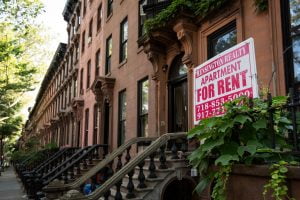 Responding quickly to listings and being ready to apply on the spot meaningfully improves your odds of landing one before someone else does.
Consider Renters Insurance
Renters insurance protects your belongings from theft, fire, and other unforeseen events, and typically runs around $18 a month in NYC — inexpensive relative to the liability and replacement-cost coverage it provides. It’s worth comparing a few policies to find the right coverage and price for your situation.
FAQ
What’s the current rent-stabilized increase in NYC?
For leases starting October 1, 2025, through September 30, 2026, the Rent Guidelines Board approved a 3.0% increase on 1-year renewals and 4.5% on 2-year renewals. This is set annually, so check the current year’s RGB order before renewing.
Is rent stabilization the same as rent control?
No. Rent stabilization covers roughly 960,600 actively-renting units; rent control covers only about 24,000 legacy units tied to a single long-term tenant since around 1971, and it’s not something a new renter can search for or apply to.
Can a landlord still deregulate a rent-stabilized unit?
Essentially no, since the 2019 HSTPA closed the main deregulation pathways (vacancy decontrol, high-income deregulation, renovation-cost loopholes). A stabilized unit generally stays stabilized regardless of how high its legal rent climbs.
How do I confirm a specific apartment is rent-stabilized?
Request the unit’s rent history directly from DHCR (email rentinfo@nyshcr.org or submit online at hcr.ny.gov) — it’s free and shows the unit’s registered status, which is more reliable than a building-wide list.
Conclusion
Finding the perfect rent-stabilized apartment in NYC takes real research and persistence, but it’s genuinely achievable — nearly half the city’s rental units qualify. Use DHCR’s rent history request to confirm specific units, keep an eye out for the new 2026 building-notice requirement, and don’t forget renters insurance once you land one.



Georges has been working in Wall Street for the last 16 years trading derivatives with hedge funds. He has been an active real estate investor for over a decade. Georges graduated from HEC Business School in Paris and holds a master in Finance from ESADE Barcelona.
