Is the Bronx Safe? A Guide for Tourists and Locals
Go Back To Previous PageMost visitors to New York City never leave Manhattan — Central Park, the Hudson River, Greenwich Village, the greatest hits. Ask a local, though, and they’ll tell you the outer boroughs are where the city actually happens. The Bronx doesn’t get the tourist traffic of Manhattan, but it’s home to Yankee Stadium, the Bronx Zoo, and the actual birthplace of hip-hop. So, is it safe to visit?
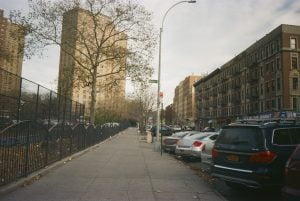 The Bronx is home to immigrant communities from across the globe, and that mix has made it a genuinely great food destination—good enough to catch Anthony Bourdain’s attention. Still, the borough carries a tough reputation among New Yorkers and non-New Yorkers alike — a reputation that, per the most current NYPD data, is fading faster than most people realize.
Here’s what the data actually says.
Crime Rates and Safety in the Bronx: The 2025 Numbers
Citywide, NYC recorded 688 shooting incidents in 2025 — the lowest in NYPD’s recorded history — along with 856 shooting victims (down 247 from 2024) and homicides down 20% year-over-year to 305, among the lowest totals in three decades.
The Bronx specifically outpaced the citywide trend on several measures: murders down 29.2% year-over-year, shooting incidents down 30.4% for the year (25.4% for the full year in a separate measure), robberies down 18.1%, burglaries down 4.5%, and grand larceny down 8.8%.
Two categories moved the other way and are worth reporting honestly rather than omitting: felony assault rose 5.9% and rape reports rose 9.4% — the latter can reflect increased reporting rather than only increased incidents, but we’re not going to guess at which explanation applies here.
The Bronx still has the highest crime rate among NYC’s five boroughs in absolute terms, but that comparison looks very different in a year like 2025 than it did even two years ago.
The Bronx vs. Other Boroughs in NYC
Historically, the Bronx’s violent crime rate has run roughly double Brooklyn’s and Manhattan’s, and roughly triple Queens’ and Staten Island’s. Property crime has historically run lower than Manhattan’s, largely due to Manhattan’s dense, tourist-heavy pickpocketing and theft activity.
Given that every borough benefited from 2025’s citywide declines, the exact multiples above have likely narrowed somewhat, though borough-by-borough 2025 breakdowns for all five boroughs weren’t available at the time of writing.
The relative ranking — Bronx highest, Staten Island and Queens lowest — has held consistently for years and is unlikely to have flipped.
The Bronx vs. Other Major U.S. Cities
Here’s where the story gets more interesting than a simple ranking: it’s not just the Bronx that’s gotten dramatically safer in the last two years — several of the U.S. cities most often cited as more dangerous than New York have too.
- Detroit recorded 165 homicides in 2025, its lowest count since 1964.
- Baltimore recorded roughly 134 homicides in 2025, its lowest in about 50 years.
- St. Louis recorded 139 homicides in 2025, continuing from an 11-year low of 150 in 2024, with overall crime down 16% — a 12-year low.
- Memphis is the one genuinely mixed case: its 2024 murder rate actually rose, ranking it among the highest in the country that year, before reversing sharply in 2025 — homicides down 23% and shootings down 38% year-to-date.
The upshot: the Bronx has historically compared favorably to cities like Detroit, Memphis, Baltimore, and St. Louis on violent crime rates, and that comparison still holds — it’s just that all of these places, the Bronx included, are having a historically good run on crime data at the same time. “The Bronx is safer than Detroit” and “The Bronx got much safer in 2025” are both true, and neither cancels the other out.
For a granular, block-by-block look, NYC’s open-data site maintains an interactive crime map specifically for the Bronx.
Discovering the Safest Neighborhoods in the Bronx
- Country Club
- Morris Park
- Riverdale
- Pelham Bay
- Spuyten Duyvil
- Bedford Park
- Baychester
- Laconia
- Throgs Neck
- Kingsbridge
The Bronx also has genuinely affluent pockets, including some of the city’s priciest private schools and neighborhoods like Riverdale — a different Bronx entirely from the one that shapes most outsiders’ impression of the borough.
Avoiding Bad Areas: The Most Dangerous Neighborhoods in the Bronx
- Mott Haven
- Hunts Point
- Tremont
- High Bridge
- Port Morris
- Soundview
- Longwood
- Norwood
- Wakefield
- Belmont
Given how much crime rates vary by neighborhood, knowing which areas to avoid matters as much as knowing which to visit. Locals often steer visitors away from the South Bronx, where crime and poverty rates have historically run among the city’s highest — though it also has few tourist attractions, so most visitors are unlikely to end up there by accident.
Most of the borough’s higher-crime areas sit in the south, including Mott Haven, Port Morris, and Hunts Point. It’s also worth avoiding Van Cortlandt Park and Pelham Bay Park after dark. Planning your route with these areas in mind is a reasonable precaution, not an overreaction — even in a year where citywide numbers have improved this much.
Is the Bronx Safe at Night?
The Bronx remains NYC’s highest-crime borough after dark on an absolute basis, though the actual risk depends heavily on the specific neighborhood, and 2025’s citywide declines apply here too. Stick to safer, wealthier areas at night, travel in a group when possible, and have a clear destination in mind rather than wandering.
Is the Bronx Safe to Visit Alone?
Solo visits are manageable with the usual precautions: stick to well-lit, busy streets, skip the side alleys, and stay aware of your surroundings rather than buried in your phone. Combined with sticking to the safer neighborhoods above, most solo visitors get through the Bronx without incident.
So, is the Bronx safe? By New York City’s own standards, it’s still the borough where you need to pay the most attention — but 2025 was a genuinely historic year for crime reduction, both in the Bronx and in several of the U.S. cities it’s often unfavorably compared to. The honest answer is the one locals have been giving all along, updated for the current data: it depends on which neighborhood you’re in, and it’s gotten meaningfully better lately.

Georges has been working in Wall Street for the last 16 years trading derivatives with hedge funds. He has been an active real estate investor for over a decade. Georges graduated from HEC Business School in Paris and holds a master in Finance from ESADE Barcelona.