How to make durable indoor signs yourself (2026)
Go Back To Previous PageCreating functional signage on your own is possible if you focus on clarity, durability, and proper installation rather than decoration. Indoor signs for rooms, offices, or facilities must remain readable for years, withstand cleaning, and stay securely attached. A successful DIY approach begins with understanding how professional signs are actually produced and used.
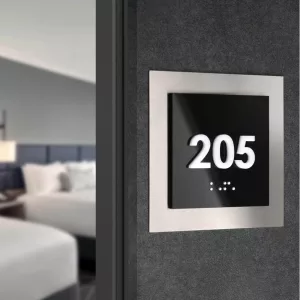
Before starting, define the sign’s purpose. Is it identifying a room, providing information, or guiding visitors? Clear intent determines size, placement, and material choice. Poor planning often leads to signs that look acceptable at first but fail quickly in everyday use.
If you want a reference point for professional standards before building your own system, examples can be found through platforms such as Bsign Store, which showcase how durable signage is typically structured.
Choosing the right material for my durable indoor signs
Material selection has the greatest impact on longevity. For indoor environments, three materials consistently provide reliable results.
- Wood is easy to cut and offers a stable surface for engraved or painted lettering. It works well in calm interiors but should be sealed to prevent moisture damage.
- Stainless steel provides excellent durability but requires appropriate tools for cutting or engraving. It is suitable for high-traffic areas with frequent contact.
- Acrylic glass allows precise shapes and clean edges. It can be cut with laser equipment or specialized tools and supports clear, printed, or engraved text.
Selecting material based on expected wear is more important than appearance alone.
Production techniques that ensure the readability of my durable indoor signs
Professional signage relies on precise fabrication methods. In a DIY context, replicating these principles improves results even with simpler tools.
Common techniques include engraving, painting, or applying vinyl lettering. CNC laser cutting produces the most consistent shapes, but smaller projects can be completed using manual tools if measurements are accurate. Permanent inks or UV-resistant coatings help prevent fading over time.
Raised lettering can be created by layering materials, while printed graphics should be sealed to protect against cleaning agents. The goal is to ensure that text remains legible after repeated contact.
Mounting methods for secure installation
Even a well-made sign loses value if it is not attached properly. Indoor signage must remain stable despite vibration from doors, temperature changes, and daily use.
Several mounting approaches are effective:
- double-sided industrial tape for lightweight signs on smooth surfaces;
- screws and wall plugs for heavier materials or textured walls;
- metal spacers to create a small gap from the wall when needed.
Whichever method is chosen, placement should be consistent across all doors so users know where to look automatically.
Planning for long-term use
DIY signs are often replaced prematurely because durability was not considered during production. Sealing surfaces, using quality fasteners, and choosing readable fonts significantly extend service life. It is also helpful to test a prototype before producing multiple pieces.

By 2026, expectations for indoor navigation are high, even in small offices or residential buildings. Clear identification is no longer seen as optional, and poorly made signs can negatively affect usability.
A carefully planned DIY signage project can provide reliable results if attention is given to material selection, fabrication techniques, and installation. When these factors are aligned, even self-made signs can support everyday navigation effectively and remain functional for years.


Georges has been working in Wall Street for the last 16 years trading derivatives with hedge funds. He has been an active real estate investor for over a decade. Georges graduated from HEC Business School in Paris and holds a master in Finance from ESADE Barcelona.