Foreclosure Process in New York: 2026 Guide
Go Back To Previous PageQuick answer: New York is a judicial foreclosure state, meaning a lender must sue you in court to foreclose — nothing happens automatically. The process is genuinely slow by national standards, typically 1–3 years and sometimes longer when contested, because New York courts require multiple notices, a mandatory settlement conference, and a full lawsuit before any sale can happen. That length isn’t a loophole to exploit; it’s real time to explore refinancing, a loan modification, or a short sale before losing the home. Two recent legal developments — the Foreclosure Abuse Prevention Act and a new 2025 condo/HOA notice law — have added real protections since this topic was last widely written about.
Foreclosure is one of those topics where the internet is full of outdated advice. It also has half-right folklore about “living for free for years.” Many articles have not been updated since two major New York law changes took effect. Here’s what’s actually true in 2026, whether you’re a homeowner trying to understand your options or a buyer looking at foreclosed properties.
What Foreclosure Actually Is
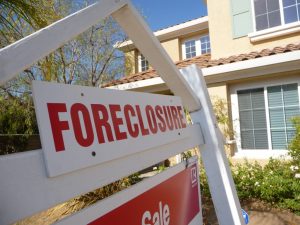 Foreclosure is the legal process a lender uses to reclaim a property after a borrower stops paying — most often a mortgage, but it can also follow unpaid home equity loans, property taxes, or (as of a new 2025 law, covered below) unpaid condo/HOA charges. In New York, that lender cannot simply take the property; they have to file a lawsuit and win it.
New York Is a Judicial Foreclosure State — Here’s Why That Matters
About half the states, including New York, require judicial foreclosure: the lender must file a lawsuit and get a court judgment before a sale can happen. The rest, including California and Texas, allow non-judicial foreclosure.In this process, a lender can foreclose much faster without going to court.
New York’s judicial requirement is a real, structural protection, not a technicality. It guarantees a homeowner a day in court. It also requires a settlement conference. It lets the homeowner raise legal defenses before anything is sold.
The Foreclosure Timeline in New York
| Stage | Typical Timing |
|---|---|
| First missed payment | Day 0 |
| Late notices begin | Within 30 days |
| Considered in default | After 3–4 missed payments |
| Required 90-day pre-foreclosure notice sent | Typically 90–120 days after default |
| Lender files lawsuit (lis pendens + summons/complaint) | After the 90-day notice period expires |
| Borrower’s deadline to respond (“Answer”) | 20 days (in-person service) or 30 days (mail) |
| Mandatory settlement conference | Within ~60 days of the lender filing proof of service |
| Judgment (if uncontested or lender prevails) | Varies widely by court backlog |
| Foreclosure sale (public auction) | Weeks to months after judgment |
Uncontested cases can move in under a year. Genuinely contested cases happen when the borrower responds, attends the settlement conference, and raises valid defenses. These cases often take 1 to 3 years. More complex cases can take longer. That length exists because New York’s process has real procedural steps built in, not because the system is designed to be gamed.
Step by Step: How the Process Actually Unfolds
1. The 90-Day Pre-Foreclosure Notice
Before a home lender can sue, New York law (RPAPL § 1304) requires a written 90-day notice.The notice gives the borrower time to fix the default. It also gives them time to apply for a loan modification. The borrower can also contact a HUD-approved housing counselor. Skipping or botching this notice is one of the most common reasons a foreclosure case gets dismissed outright.
2. Lis Pendens, Summons, and Complaint
Once 90 days pass without resolution, the lender files a lis pendens (a public notice of pending litigation) with the county clerk, along with a summons and complaint that formally starts the lawsuit. You then have 20–30 days to file a written “Answer” that explains your defenses. Missing this deadline is the biggest mistake a homeowner can make. It can lead to a default judgment against you, often almost automatically.
3. The Mandatory Settlement Conference
New York requires a settlement conference under CPLR Rule 3408. Its goal is to reach a resolution. This may include a loan modification, a repayment plan, or a short sale. The case cannot move forward until then. This is a genuine opportunity, not a formality, and showing up matters: failing to appear can significantly weaken your position.
4. Summary Judgment or Trial
If no settlement is reached, the lender typically moves for summary judgment, asking the court to rule without a full trial. If you’ve raised a legitimate defense — improper notice, lack of standing, or documentation problems — the case can proceed to trial instead. If not, the court can grant judgment in the lender’s favor.
One legitimate defense worth knowing about: predatory lending. If a lender used deceptive practices when making the loan, you can raise that as a defense. For example, the lender may approve payments that the borrower’s documented income clearly can’t support.Or the lender may misrepresent the loan terms. In some cases, courts have voided the mortgage note entirely. This isn’t a loophole to fabricate; it’s a real legal defense that applies when it applies, which is exactly why an attorney’s review of your original loan documents matters at this stage.
5. The Foreclosure Sale
The property is sold at public auction, typically at the county courthouse, after the sale is advertised in a local paper for several consecutive weeks. If the winning bid exceeds the total debt, the borrower can legally claim the excess funds. Many homeowners do not know this.
6. After the Sale
New York has no post-sale right of redemption. Once the sale is final, ownership transfers. There is no buy-back window. If the former owner does not leave voluntarily, the new owner usually seeks eviction. In practice, some new owners offer “cash for keys.” This is a payment for a quick, clean move-out. Eviction is often slow and costly for everyone involved.
What If the Sale Doesn’t Cover the Debt?
If the auction price is less than the total amount owed, the difference is called a deficiency. In New York, a lender may seek a deficiency judgment against the former owner for the remaining balance. Courts have discretion and may adjust the amount. They may use the property’s fair market value. They do not always enforce the full gap. If a deficiency judgment is entered, a lender can use collection methods like wage garnishment. This is another reason to resolve the issue before the sale. It is usually better than resolving it after the sale.
Two Real Legal Changes Worth Knowing About in 2026
The Foreclosure Abuse Prevention Act (FAPA)
Enacted in December 2022 and upheld as constitutional by New York’s Court of Appeals in November 2025, FAPA closed a loophole lenders had used to effectively restart the six-year statute of limitations on a foreclosure claim by voluntarily dismissing and refiling suits.
Under FAPA, once the six-year clock starts, lenders cannot reset it using those tactics. This is a meaningful, court-confirmed protection. It did not exist when most older foreclosure guides were written. It also survived a direct constitutional challenge less than a year ago.
New Condo and HOA Notice Requirement (October 2025)
Governor Hochul signed a law in October 2025. It extends the 90-day pre-foreclosure notice rule. This rule already applies to mortgage lenders. It now also applies to condo boards and incorporated HOAs. They must give notice before foreclosure for unpaid charges, assessments, or fines. If you own a condo and fall behind on common charges, your board must now give advance warning. This is the same warning a mortgage lender would give. This change is real and current. It closes a gap that existed for years.
Loss Mitigation: Your Real Options Before It Gets This Far
New York homeowners facing foreclosure also have a legal Foreclosure Bill of Rights, administered by the Department of Financial Services, that spells out required disclosures and protections during this process — worth reading directly rather than relying on secondhand summaries, including this one. The best time to act on any of the following is during the 90-day notice period, not after a lawsuit is already filed:
- Loan modification — restructuring your payment terms with the lender.
- Forbearance — a temporary pause or reduction in payments.
- Refinancing — if your credit and equity still support it.
- Short sale — selling the home for less than the loan balance, with lender approval, to avoid foreclosure entirely.
- HUD-approved housing counseling — often free — and lenders are required to provide referrals in the pre-foreclosure notice itself.
A missed mortgage payment also affects your ability to qualify for new financing, so acting early protects more than just the current property.
Free Help That Actually Exists
New York’s Attorney General runs the Homeowner Protection Program (HOPP) — a statewide network of over 90 housing counseling and legal services organizations that provide free help with loan modifications, court representation at settlement conferences, and general homeownership counseling.
It’s not a COVID-era program, and it’s not going anywhere on a fixed expiration date tied to any pandemic order — call the HOPP hotline at (855) 466-3456 or visit HomeownerHelpNY.org directly rather than paying a “foreclosure rescue” company for help that’s available for free.
Buying a Foreclosed Home in NY
Foreclosed properties can be real opportunities.But New York’s process changes what that looks like, compared to faster non-judicial states. Auction purchases require cash or certified funds. You usually pay a 10% deposit at the sale. The remaining balance is due within 30 days. Properties sell as-is, with no inspection contingency. Bank-owned (REO) properties that didn’t sell at auction are a lower-risk entry point, since they’ve already transferred to the lender and can be purchased through the normal listing process with standard financing and inspections. Either way, a title search matters more here than in a typical purchase, since liens and unresolved claims can survive a foreclosure sale.
Foreclosure FAQ
How long does foreclosure take in NY?
Uncontested cases can finish in under a year. Contested cases often take 1 to 3 years. Complex cases can take longer. This is due to New York’s required notices, settlement conferences, and court process.
Is New York a judicial or non-judicial foreclosure state?
Judicial — a lender must file and win a court lawsuit before foreclosing. This differs from non-judicial states like California or Texas.
Will foreclosure hurt my credit score?
Yes, often by a lot (100+ points). It can stay on your credit report for up to seven years. Missed payments before foreclosure can hurt your score first.
What is the Foreclosure Abuse Prevention Act?
A 2022 New York law, upheld as constitutional in November 2025, stops lenders from resetting the six-year limit. It does this by dismissing and refiling foreclosure suits.
Can I buy a foreclosed home in NY with a regular mortgage?
At the courthouse auction, no — cash or certified funds only. Bank-owned (REO) properties that do not sell at auction can often be bought with standard financing.
The Bottom Line about the Foreclosure Process
New York’s judicial foreclosure process is slow and protective. Use that time wisely for a loan modification, a short sale, or legal advice. Do not treat it as a free place to live. If you face foreclosure, act during the 90-day notice period. This is the best time to act. It helps to involve a HUD-approved counselor or real estate attorney early. Do this before any lawsuit is filed.
If you’re on the buying side and a foreclosure or bank-owned property has caught your eye, NestApple pays buyers up to 2% back at closing—worth having in your corner, given how these deals can move differently than a standard purchase.


Georges has been working in Wall Street for the last 16 years trading derivatives with hedge funds. He has been an active real estate investor for over a decade. Georges graduated from HEC Business School in Paris and holds a master in Finance from ESADE Barcelona.