Guarantor NYC: Who Qualifies, the Cost, and When to Use One
Back to the NYC Real Estate Blog
A guarantor in NYC is a person or company that agrees to pay your rent if you can’t. A personal guarantor typically needs annual income around 80 times the monthly rent, double the 40x a tenant needs, plus strong credit, a ratio breaking down the 80x rule covers in more depth. If no relative qualifies, an institutional guarantor fills in for a fee.
We represent renters and buyers in New York. The guarantor question comes up constantly, especially for people moving here without a local financial history.
A guarantor is neither a roommate nor a co-tenant. They vouch for the money, nothing else.
When you need a guarantor in NYC
Most NYC landlords want a tenant earning 40 times the monthly rent per year. Fall short of that, or be short on credit or US history, and the city would like a second adult to vouch for you.
You’ll usually need a guarantor if:
- Your annual income is below 40 times the monthly rent.
- Your credit score is under 650.
- You’re new to the US and have little or no domestic credit history.
- You’re a student or between jobs.
Our down payment and credit hub covers the buying side of the same problem, and our guide to renting in NYC covers how representation works now.
Who can be a guarantor for an apartment?
A personal guarantor is usually a parent or close relative who has an extra 80 times your annual rent available. That’s roughly double a tenant’s own 40x requirement because the guarantor assumes the full risk without living there. Most landlords also want the guarantor’s credit score to be above 700.
The guarantor proves it with tax returns and pay stubs, the same documents a tenant provides. Some buildings require the guarantor to be in New York or the tri-state area, though many no longer do. Anyone can technically serve, friend or family, but the income bar screens out most people who aren’t parents.
Guarantor vs cosigner
People use these interchangeably, and for a rental, they’re close but not identical. One signs from a distance; the other gets a key.
| Guarantor | Cosigner | |
|---|---|---|
| Named on the lease | Backs it, not a tenant | Yes, as a co-tenant |
| Right to occupy the apartment | No | Yes |
| Income requirement | Higher, around 80x monthly rent | Often the same as a tenant |
| When they owe rent | After the tenant fails to pay | From day one, jointly |
For a rental, a guarantor is the more common structure. The distinction matters more at the time of purchase, where our guide to co-signers versus guarantors for an NYC home breaks it down.
Guarantor insurance in NYC
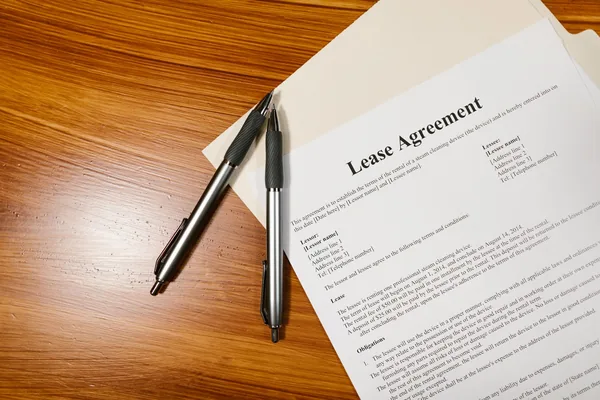
When nobody in your family clears the 80x bar, you can rent a guarantor, which is exactly as strange as it sounds. Institutional guarantor companies, Insurent, The Guarantors, Rhino, and Leap, among them, act as your guarantor for a fee.
The fee is a percentage of the annual rent, paid upfront and non-refundable. One comparison of NYC providers reported ranges of roughly 40% to 130% of a single month’s rent, with non-US renters at the higher end. That’s a wide band, so confirm the exact cost with the company for your lease. Our buyer rebate is the buying-side equivalent of getting some of that money back.
Not every building accepts institutional guarantors, and some accept only specific ones. Check the building’s policy before you apply. As Nicole says of New York’s rental costs more broadly, “nothing really got cheaper” when the rules changed, so budget for the fee as a real line item.
What the HSTPA changed
Before 2019, a renter who couldn’t qualify could often pay several months’ rent upfront or a larger security deposit instead of providing a guarantor. You used to be able to buy your way in; now you bring a backer.
New York’s Housing Stability and Tenant Protection Act of 2019 limits security deposits across the state. Landlords can charge no more than one month’s rent. It also bans landlords from collecting rent in advance. That closed the prepay workaround, and it’s a big reason guarantors, personal and institutional, became the standard fix for a thin application.
When the same idea shows up in a co-op purchase
The guarantor concept follows you from renting to buying. An NYC co-op board can require a guarantor for a purchase, who promises the board that your monthly maintenance will be covered if you fall short.
It works much like the rental version: the guarantor provides financial documents, needs income well above the maintenance charge, and owns nothing. The difference is that a co-op board, not a landlord, makes the decision, and some boards don’t allow it at all. Our guides to co-purchasing versus a guarantor and a co-signer for a house in NYC cover the purchase side. If you’d rather have a broker steer you toward buildings that fit your situation, that’s what we do, with a rebate at closing.
Common questions
What is a guarantor for an apartment? A person or company that agrees to cover your rent if you can’t pay, so a landlord approves you even when your own income or credit doesn’t independently qualify.
How much income does a guarantor need in NYC? Typically about 80 times the monthly rent per year, roughly double what a tenant needs, plus a credit score around 700 or higher.
How much does an institutional guarantor cost? A percentage of the annual rent, paid upfront and non-refundable. The amount varies by apartment and applicant, so confirm with the provider.
Does a guarantor have to live in New York? Some buildings require a guarantor in New York or the tri-state area. Many no longer do, but confirm the building’s policy before applying.
Can a guarantor live in the apartment? No, not by default. A guarantor has no right to occupy the unit. That’s the main difference between a guarantor and a cosigner.




Nicole Fishman Benoliel co-founded NestApple in 2017. She's a lawyer admitted to the New York bar - her law degree is from La Escuela Libre de Derecho in Costa Rica, with further study at IE Business School in Madrid and an LLM from Fordham in New York. She does not act in a legal capacity at NestApple; every client is referred to an attorney who handles real estate deals full time.