The Nest

NestApple's Real Estate Blog

Featuring real estate articles and information to help real estate buyers and sellers. The Nest features writings from Georges Benoliel and other real estate professionals. Georges is the Co-Founder of NestApple and has been working as an active real estate investor for over a decade.

NYC Buyer Broker Commission Rebates (2026): How Much You Actually Get Back

Go Back To Previous Page

Most NYC buyers know commissions exist. Few know how much of that money they can legally get back. At NestApple, we’ve structured our model around one simple idea. If a commission is being paid, the buyer should benefit from it. This isn’t theoretical — it’s how our clients routinely receive tens of thousands of dollars back at closing. Unfortunately, this is a well-kept secret in the real estate brokerage industry. But with a buyer rebate, you can use the funds to renovate or buy new furniture.

Therefore, it’s essential to ensure you receive a buyer rebate when working with your agent in the New York real estate market.

How Are Real Estate Commissions Paid in NYC?

To understand commission rebates, it’s essential to understand how commissions are paid in the real estate industry. It can be a bit complicated, so bear with us as we explain it. Firstly, the seller pays the listing agent a commission, usually 6% of the purchase price. The listing agent then offers to split the commission equally (50/50) with the buyer’s agent. The buyer’s agent typically receives 3% of the purchase price.

Buyer agents often claim their services are free, which is technically accurate. This is because buyers don’t pay their agents directly. However, buyers are the only party that brings cash to closing. So, they effectively pay for everyone’s services.

This misconception benefits real estate agents, making buyers less likely to consider the cost of using an agent. However, this is where commission rebates come in.

What Are Buyer Agent Commission Rebates in NYC?

A buyer broker rebate is money returned to you from the commission already built into the deal.

  • You’re not paying extra
  • You’re not negotiating a discount with the seller
  • You’re simply receiving a portion of the commission that would otherwise go to the broker.

A commission rebate for buyer agents is when a portion of their commission is given to the buyer. This adds an extra step to the process, in which the agent returns some of their commission to the buyer.

A rebate means you receive a portion of the broker compensation that’s already built into the transaction.

The rebate amount can vary and is decided between the buyer and agent. At NestApple, buyers receive two-thirds of the total commission as a rebate.

These refunds are called “commission rebates,” “buyer rebates,” “broker rebates,” or “buyer broker rebates,” and the process is simple. The buyer can either receive a check at closing or have the rebate applied as a credit to the real estate transaction.

The part most buyers misunderstand

In NYC, commissions are typically embedded in the transaction, not added on top. That creates a key dynamic:

  • The total commission is usually set before you enter the deal
  • Your leverage is how that commission is allocated, not whether it exists

That’s where a rebate model makes a real difference.

Let’s take a typical Manhattan purchase:

  • Purchase price: $1,200,000
  • Total commission: 5% = $60,000
  • Buyer broker portion: ~$30,000

Traditional model:

  • Buyer receives: $0

NestApple model:

  • We retain a small portion
  • The rest is rebated to you

Typical outcome: $15,000–$25,000+ back at closing

Are Commission Rebates Legal in NYC?

Without commission rebates, a buyer cannot control their agent’s compensation. This means that the commission offered is the commission paid, leaving no room for negotiation.

For instance, you purchase a $1,000,000 apartment with a 3% commission. In this scenario, your agent will earn a fixed $30,000 commission. However, you can reduce your agent’s compensation by that same amount by receiving a rebate. If you work with NestApple, for example, you could receive a $20,000 rebate.

Commission rebates are legal in most parts of the United States. Although some states still do not allow them, they are becoming increasingly popular and widespread.

  • In 2021, Louisiana legalized rebates.
  • In 2022, Oregon clarified that rebates can be applied as transaction credits.
  • Their status in Iowa is not clear. But the Iowa Association of Realtors said in a 2021 interview that they are usually okay. This is true if they are disclosed.

Are Commission Rebates Taxable?

The answer to whether commission rebates are taxable is no. In 2007, the IRS issued a private letter ruling. It treated commission rebates as a reduction in the purchase price.

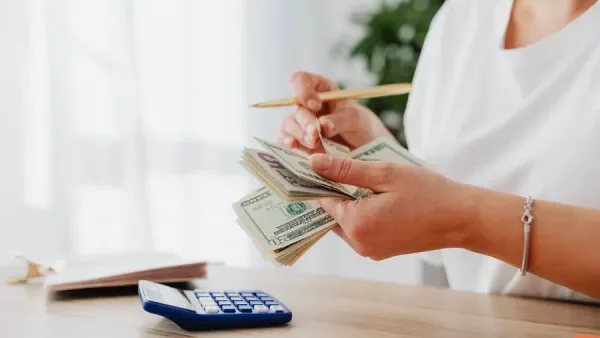
cash back check to Soula in New York Real Estate

Price. If you purchased a $1,000,000 apartment with a $20,000 rebate, the IRS would consider the price paid to be $980,000.

Sometimes, buyers ask if they will receive a 1099 for their commission rebate. However, since the rebate is not income, they will not receive a 1099.

While the private letter ruling is not a universal rule, there have been no instances of commission rebates being taxed. Nevertheless, it is always a good idea to consult with your accountant to ensure compliance with tax regulations.

How Do Agents Feel About Buyer Rebates?

We must split the traditional broker community into two groups to answer this question.

Intelligent listing agents understand that offering a rebate to buyers is advantageous for them. The commission received by the buyer’s agent doesn’t impact the listing agent’s commission. Offering a rebate makes it easier to close deals because the buyer pays less.

Some traditional buyer agents may feel threatened by commission rebates because they don’t want to make less money. To justify their high commissions, they may argue that price and value are related, implying that if you pay less, you get less.

However, the reality is that these agents don’t do less work. This is true even when their client buys a property with a lower commission. If a property offers a 2.5% commission instead of 3%, the agent doesn’t suddenly do five-sixths of the work.

NestApple uses technology to reduce costs, increase efficiency, and give buyers savings.

How rebates are actually paid

In NYC, rebates are typically delivered in one of two ways:

  • Check or wire at closing
  • Credit structured through your attorney (when feasible)

We coordinate this with your attorney and lender to ensure:

  • Compliance with lender rules
  • No disruption to underwriting

Where rebates matter most

Rebates have the biggest impact when:

  • You’re buying above $1M (absolute dollars become meaningful)
  • You’re financing (cash back improves liquidity post-closing)
  • You’re comparing brokers offering similar services

On a $2M purchase, the difference between models can easily exceed $40,000

Can I Negotiate Buyer Rebates in NYC?

Any New York City real estate agent or brokerage can offer a buyer rebate. However, many agents are unwilling to reduce their commission and may even feel insulted if you suggest it. Additionally, some brokerages have minimum commission rates that prevent their agents from offering rebates.commission rebate in real estate

To avoid awkward conversations or negotiations, it’s best to work with a real estate brokerage that openly offers rebates. Nestapple’s business model is based on lower commissions, so they are happy to have you as a client and offer you a rebate.

This way, you will know exactly how much you will receive without confusion.

Regardless of who you work with, getting the rebate agreement in writing is essential to protect yourself and ensure everyone is on the same page. Note that the total commission paid to a buyer’s agent is fixed and cannot be negotiated. In New York City, all members of the Real Estate Board of New York (REBNY) and OneKey receive the same commission for a given listing.

What Are Some Possible Issues With Buyer Rebates?

When you receive a buyer rebate, you may face an issue with your loan-to-value (LTV) of the mortgage. If the rebate is not considered during underwriting, your LTV may be too high. However, it can be avoided by informing your lender about the rebate.

For instance, when buying a home for $1,000,000 and the bank requires a 20% down payment, you would pay $200,000 and borrow $800,000. However, the rebate is typically treated as a deduction from the purchase price. If you receive a 2% rebate, the bank will consider it as if you are obtaining an $800,000 loan for a $980,000 purchase. As a result, your LTV will increase to 81.6% ($800,000 / $980,000).

Although it may not seem significant, banks are strict about these ratios, which could create problems for your transaction. The solution is simple: Inform your bank about the rebate, and they will factor it into underwriting. As long as the bank is aware of it, everything should proceed quickly.

Have you ever wondered why buyer-agent commission rebates aren’t more common in NYC?

It’s a question many people ask, and understanding the reasons behind it can be quite insightful. Let’s explore this topic together and see what factors are at play. Commission rebates are becoming more popular, but many buyers and sellers still do not know about them. This is often due to a lack of information.

Greed

If your boss asked you to do three times more work for the same pay, you wouldn’t be happy. This is true even if you got a 50% raise over the last ten years. You may have also been doing less work during that time. This is similar to asking a “traditional” real estate agent for a commission rebate.

Although your transaction would still be profitable, they commonly become complacent and believe they deserve $700 per hour.

Let’s take a closer look at the size and frequency of transactions together, so we can better understand the patterns and make informed decisions.

Traditional brokers and real estate professionals have an advantage when buying NYC apartments. These purchases are large and happen infrequently. It isn’t easy to be an expert at something you only do every 5 to 7 years. That’s the average holding period for NYC real estate. First-time buyers often play it safe and assume they must pay their broker 3%.

However, when NestApple talks to repeat buyers, the chats are much shorter. They already know what a broker does. They also know a 3% commission is unreasonable.

Expense Structures

If a broker charged you more for doing less, they would try to keep it a secret. Most brokers spend money on unnecessary, buyer-funded expenses like fancy offices and all-day car services. This has led traditional brokers to charge high commissions and stay locked into costly structures. This makes it hard for them to offer rebates, even if they want to.

However, you don’t have to use a traditional broker to navigate the housing market. You can take advantage of commission rebates instead! If you’ve made it this far, we’re sure you’d agree that everyone should get a commission rebate.

Bottom line

A commission rebate doesn’t change the deal. It changes who benefits from it.

With the right structure, you can:

  • Buy the same property
  • With the same representation
  • And walk away with significant cash back


Written By: Georges Benoliel

Georges has been working in Wall Street for the last 16 years trading derivatives with hedge funds. He has been an active real estate investor for over a decade. Georges graduated from HEC Business School in Paris and holds a master in Finance from ESADE Barcelona.

RSS Feed