The Most Dangerous Neighborhoods in New York City (2025-2026)
Go Back To Previous PageIf you live in any major city, crime risk varies block by block, and that’s especially true in NYC. The good news: New York’s citywide numbers have improved dramatically in 2025 — 305 homicides (down roughly 20% year-over-year) and 688 shooting incidents, the lowest total in NYPD’s recorded history. Not all NYC neighborhoods share that decline equally, though, and a few areas remain genuinely higher risk than the rest of the city. Here’s an honest, currently-sourced look at which ones, and why some neighborhoods that show up on older “most dangerous” lists don’t really belong there anymore.
Rankings below are based on violent crime rates relative to the citywide average, drawn from NYPD’s own precinct data and, where cited, DOHMH assault-hospitalization data. Violent crime includes murder, rape, robbery, and aggravated assault.
Brownsville, Brooklyn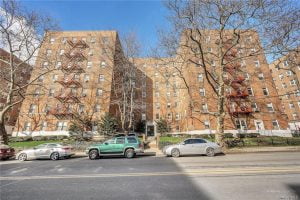
Brownsville, in eastern Brooklyn (73rd Precinct), has long carried a reputation as one of NYC’s most dangerous neighborhoods, with elevated rates of assault-related hospitalizations per DOHMH data. But 2025 brought a real, well-documented turnaround: per the Brooklyn DA’s office, murders in the precinct fell from 14 to 2, compared to the first half of 2024, alongside a 45% drop in shootings over the same period. Shootings were down 42% year-to-date as of mid-October 2025, and early 2026 data show the decline continuing (2 shootings year-to-date through March 2026, versus 7 at the same point in 2025).
Brownsville still has a higher violent crime rate than the citywide average and remains on this list for that reason, but any “most dangerous” ranking that doesn’t account for this decline is based on stale data.
Jamaica, Queens
Jamaica is among the higher-crime areas of Queens, with a mixed commercial and residential character and a significant number of government and retail establishments. Historically, shooting incidents and low-level drug activity have been more frequent here than in most of Queens, though gang-related activity has dropped sharply from prior decades. As with the rest of the city, expect current conditions to be meaningfully safer than older data suggests.
Hunts Point, The Bronx
Hunts Point sits on a peninsula on the East River in the South Bronx (41st Precinct), home to major food distribution and shipping industries. Roughly 30% of residents live below the poverty line, well above the citywide average, and the area has historically had a higher unemployment rate and incarceration rate than most NYC neighborhoods, both correlated with elevated crime. DOHMH data has historically shown Hunts Point with one of the city’s higher non-fatal assault hospitalization rates.
We couldn’t confirm a single current, dated NYPD figure isolating Hunts Point specifically for this update — if you want precinct-level current numbers, the 41st Precinct’s NYPD CompStat reports are the primary source.
Mott Haven, The Bronx
Just west of Hunts Point, Mott Haven (40th Precinct) has historically had one of the city’s highest rates of non-fatal assault hospitalizations.
Nearly half of residents did not finish high school, and only about 16% hold a college degree, both correlated with the neighborhood’s elevated poverty and crime rates.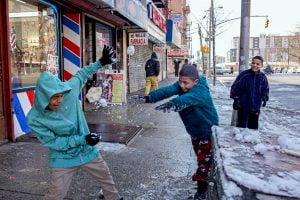
As with Hunts Point, treat specific violent-crime-rate figures you see cited elsewhere with caution unless they’re sourced directly to a dated NYPD CompStat report for the 40th Precinct.
Bedford-Stuyvesant, Brooklyn
Bed-Stuy’s crime picture is genuinely split by precinct in 2025, not uniform the way older “most dangerous” lists tend to present it.
The 81st Precinct (east of Marcus Garvey Blvd) was down roughly 7.8% year-to-date in 2025 versus 2024, while the 79th Precinct (west) was up roughly 5.7% year-to-date over the same period.
Robberies, motor vehicle theft, and property crime remain more common here than in much of Brooklyn, particularly on the west side, so it’s worth knowing which side of the neighborhood a specific address falls in rather than treating Bed-Stuy as a single uniform risk zone.
Fordham, The Bronx
Fordham has one of the smaller populations on this list at roughly 64,000 residents, split between separate North and South police service areas. It’s partly a college neighborhood, home to a portion of the Fordham University campus, but has historically carried an aggravated assault rate well above the national average.
As with the other Bronx entries above, current precinct-specific figures are best sourced directly from NYPD CompStat rather than older aggregator estimates.
Midtown Manhattan: A Different Kind of Risk, Not a Direct Comparison
The 40-60 word answer: Midtown’s overall violent crime rate is only modestly above the national neighborhood average — nowhere close to Mott Haven or Hunts Point — and its crime profile is dominated by grand larceny and pickpocketing tied to tourist foot traffic around Times Square, not violent crime. It doesn’t belong ranked flush alongside genuinely high-violent-crime neighborhoods, and we’re not ranking it that way here.
Midtown is one of the most visited parts of New York, and that visibility brings property crime — pickpockets and opportunistic theft cluster where tourists do. If you’re weighing personal safety while visiting or living there, that’s the real risk profile: watch your belongings, not your back.
East Harlem
East Harlem, in upper Manhattan, has long been a center for immigrant communities and remains one of the city’s more economically diverse neighborhoods.
It has historically seen more robberies, shootings, and drug activity than much of Manhattan, concentrated around specific precincts and intersections rather than evenly across the neighborhood.
Like most of the city, East Harlem has benefited from NYC’s broader 2024-2025 crime decline, with increased patrol presence cited as a contributing factor.
At a Glance
| Neighborhood | Borough | Precinct | 2025 Trend |
|---|---|---|---|
| Brownsville | Brooklyn | 73rd | Sharp improvement (shootings down 42-45%) |
| Jamaica | Queens | 103rd/113th | Directionally improving with citywide trend |
| Hunts Point | The Bronx | 41st | Historically elevated; current precinct data not independently confirmed |
| Mott Haven | The Bronx | 40th | Historically elevated; current precinct data not independently confirmed |
| Bedford-Stuyvesant | Brooklyn | 79th / 81st | Split: 81st down ~7.8% YTD, 79th up ~5.7% YTD |
| Fordham | The Bronx | North/South PSA | Historically elevated aggravated assault rate |
| East Harlem | Manhattan | 23rd/25th | Improving with increased patrol presence |
FAQ
Is NYC getting safer or more dangerous?
Safer, and significantly so in 2025: citywide, homicides fell to 305 (down roughly 20% year-over-year) and shooting incidents fell to 688, the lowest total in NYPD’s recorded history. Neighborhood-level improvement varies, but the citywide trend is clearly downward.
Is Brownsville still dangerous?
It still has a higher violent crime rate than the citywide average, but 2025 brought a dramatic, well-documented improvement — shootings down over 40% year-over-year per the Brooklyn DA’s office. Treat any ranking that doesn’t reflect this decline as outdated.
Is Midtown Manhattan actually dangerous?
Not in the way Mott Haven or Hunts Point are. Midtown’s elevated crime is overwhelmingly property crime (pickpocketing, theft) tied to tourist density, not violent crime, and its overall violent crime rate is only modestly above the national neighborhood average.
Where can I find current, precinct-level NYPD crime data?
NYPD publishes CompStat reports by precinct directly on nyc.gov, which is the most reliable and up-to-date source for neighborhood-specific figures—more current than most third-party aggregator sites.
Learn More About NYC Neighborhood Safety
Now that you know which NYC neighborhoods carry more risk than the citywide average, weigh that against everything else that matters in a home search — including checking out our guide to the safest neighborhoods in NYC for the other end of the spectrum.
At NestApple, we help simplify buying, selling, and renting in NYC without astronomical broker fees, representing buyers, sellers, and tenants at a fraction of what most firms charge. Contact us to learn more about finding the right neighborhood for you.


Georges has been working in Wall Street for the last 16 years trading derivatives with hedge funds. He has been an active real estate investor for over a decade. Georges graduated from HEC Business School in Paris and holds a master in Finance from ESADE Barcelona.