Buying a Townhouse in NYC
Back to the NYC Real Estate Blog
Buying a townhouse means buying a whole building, and the thing that matters most is how many legal dwelling units it holds. That number sets your tax class, your sidewalk liability and which inspections you owe. The lines fall at 2, 3 and 4 units, and crossing the last takes you from a 6% assessment ratio to 45%.
We represent buyers on townhouses in Manhattan and Brooklyn, and we’ve handed back more than $11 million since 2017. In all that time nobody has opened a viewing by asking how many legal units the building has. It’s the question that gets asked last and matters most, usually in that order.
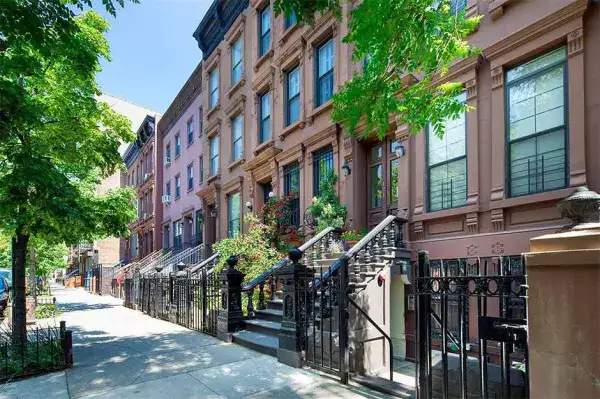
Everyone talks about width. Count the units instead
Ask any broker about a townhouse and you’ll hear about width within thirty seconds. Under 18 feet is narrow, over 20 is a trophy, and the numbers in between are treated like a personality test.
Width is real. It’s also the thing every guide already tells you, at length, with photographs.
What almost nobody puts in front of a buyer is the unit count. It changes the rules you live under, and it changes them in steps, like a staircase in the dark.
Common questions
Is a townhouse the same as a brownstone? Brownstone is the facade material, not the building type. Brick and limestone townhouses are the same animal with a different front, and only the brownstone ones shed dust.
Do I need board approval to renovate? No, and it’s one of the real advantages. If the house is in a historic district, the Landmarks Preservation Commission takes that role for anything visible from the street, which is slower but a different kind of slow.
Can I convert a multi-family townhouse back to single-family? Usually yes, and it changes the certificate of occupancy along with the tax class. Going from four units to three moves you from Class 2 to Class 1, which is why the conversion sometimes pays for itself.
| Legal units | Property tax class | Sidewalk injury liability | Gas piping inspection | Annual boiler inspection |
|---|---|---|---|---|
| 1 family | Class 1 | exempt, if owner-occupied | exempt (R-3) | exempt |
| 2 family | Class 1 | exempt, if owner-occupied | exempt (R-3) | exempt |
| 3 family | Class 1 | exempt, if owner-occupied | required, every 4 years | exempt |
| 4+ family | Class 2 | you are liable | required | required |
Two houses on the same block, identical from the pavement, can sit on opposite sides of three of those lines. That’s the sort of thing worth knowing before you bid, and it’s what having somebody represent you is actually for.
The tax class jump between three units and four
This is the biggest single line on the table, and the one owners warn each other about in forum threads at one in the morning, in capital letters.
Class 1 covers one- to three-unit residential property. Its assessment ratio is 6% for 2026-27, and assessed value can’t rise by more than 6% a year or 20% over five years (Department of Finance, Class 1 guide).
Class 2 starts at four units. The assessment percentage there is 45%, and the Class 1 caps don’t apply (Class 2 guide).
Owners reached the same conclusion without reading either document. On Brownstoner in March 2010, Rosy wrote that “property taxes on 4 family homes are through the roof, I would also go for the 3 family”, and buildingequity in the same thread: “You might want to lean towards a 3 family if you can as taxes will be much lower.”
A fourth unit has to earn a lot of rent to pay for what it costs you. Sometimes it does. But that arithmetic belongs in your offer, not in an envelope from the Department of Finance eighteen months later, which is where most people meet it.
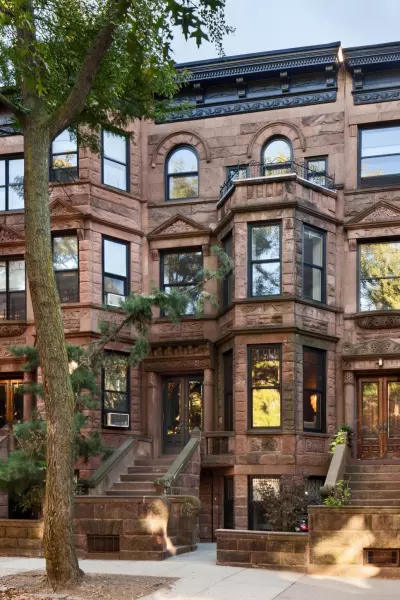
The sidewalk rule, and the exception that gets left out
Here is where the previous version of this page was wrong, along with most of the internet, confidently.
Admin Code §7-210(a) puts the duty to maintain the sidewalk on the owner, with no exception. Everyone quotes that part. Subdivision (b) is where liability for an injury lives, and it ends like this (full text):
“This subdivision shall not apply to one-, two- or three-family residential real property that is (i) in whole or in part, owner occupied, and (ii) used exclusively for residential purposes.”
So for the most common townhouse in the city, the answer is the opposite of what you’re usually told. Before anyone celebrates: all three conditions have to hold, and they’re the kind that quietly stop holding.
| The condition | What breaks it |
|---|---|
| One, two or three families | A fourth unit |
| Owner occupied, in whole or in part | A house you rent out entirely |
| Used exclusively for residential purposes | A shop, an office, a studio at street level |
Three things survive the exemption anyway. §19-152 still makes you repair flags when the DOT orders it, at your own cost, with no family exception and the bill as a lien. §16-123 still requires snow clearing within four hours of the snow stopping, with the hours between 9pm and 7am excluded, and fines running $10 to $350 depending on how often you’ve been caught. And §28-301.1 requires every building to be kept in safe condition, full stop.
None of that makes the exemption unimportant. The slip-and-fall claim is the one that ends up in court. The shovelling is merely cold, dark and at seven in the morning.
| What still applies, exemption or not | The rule |
|---|---|
| Repairing flags when the DOT orders it | §19-152, at your cost, billed as a lien |
| Clearing snow within four hours | §16-123, 9pm to 7am excluded |
| Keeping the building safe, full stop | §28-301.1 |
Certificate of occupancy: the 1938 line
The old version of this page said every residential building in New York needs a certificate of occupancy. The DOB says otherwise:
“Buildings built before 1938 aren’t required to have a Certificate of Occupancy – unless later alterations changed its use, egress or occupancy.”
Most of the brownstone stock predates 1938 by a comfortable margin. So “no CO on file” is a normal finding on a townhouse rather than a red flag, and treating it as one loses buyers houses every year.
What replaces it is a Letter of No Objection, which confirms the legal use. It only issues if the use complies with current codes and zoning and the occupancy load and exits are unchanged. That second condition is the one that fails, usually because somebody split a floor decades ago and nobody filed.
The question isn’t “is there a CO”. It’s whether the use the seller describes matches the use the city has on file. Those two drift apart quietly, usually because somebody split a floor in 1974 and saw no reason to involve the government. The gap’s findable before you sign, which is the good news.
What holding one actually costs
Nobody can quote you a number, and anyone who does is selling something, usually the thing they just quoted. What follows is the honest version: owners naming their own bills, each with its year. A repair price without a date is a rumour with a dollar sign in front of it.
| The line | What owners reported | When |
|---|---|---|
| Roof replacement, 20×40 flat | $27,000, against $7,000 for a silicone repair | 2025 |
| Roof inspection, typical Brooklyn brownstone | $700, $800 in Manhattan | 2025 |
| Brownstone facade replacement | quotes of $35,000 to $60,000 | 2018 |
| Brownstone facade, 3-storey house | $27,000 | around 2013 |
| Annual running cost, 4-storey house | $17,000 all-in, including a $2,500 contingency | 2009 |
That last row is seventeen years old and the number is worthless. The shape of it isn’t. Tax, insurance, utilities, garden, every mechanical part prorated across its own lifespan, and a contingency line that exists before anything has broken. The contingency is the grown-up part, and it is the line everybody deletes first.
The same thread produced the line worth carrying. One owner budgeted “at least $15,000 and maybe as much as $40,000 in case you need a roof, facade, plaster (in case of flood), boiler, or need to relocate a family of raccoons.”
The raccoons are a joke. The range is not. In this city, neither are the raccoons.
On the facade, know why it’s crumbling, because everybody notices the dust and almost nobody asks what made it. One owner explains it properly: “Brownstone cement is actually very porous and over time it disintigrates and that is why you have the dust. The bigger problem is any water … seeps behind the facade.”
So the sand on your steps is not the problem. It’s the receipt.
One relief for most townhouses: the five-year facade inspection cycle under Local Law 11 only binds buildings over six storeys (§28-302.1). A three to five storey house is out of the programme, and out of the penalties attached to it.
| If the building is in FISP | The DOB charges |
|---|---|
| Filing on time | $425 to file, $305 for a subsequent cycle |
| Filing late | $1,000 per month |
| Not filing at all | $5,000 per year |
| Not fixing a flagged condition | $2,000 |
Those are current as of 27 August 2026, and they’re the reason the six-storey line is worth checking rather than assuming.
Before you make an offer, somebody should be pricing these against the house in front of you rather than against a guide. That’s the job we do for the buyers we represent, and the rebate at closing is roughly what a new roof costs.
What we see in the field
Bring an engineer, not just an inspector. Most licensed inspectors won’t go on the roof. Which is unfortunate, because it’s one of the two repairs that reorder a budget. The other is the facade. Both sit above eye level, and neither has ever appeared in a listing photograph.
On a 150-year-old building the structural read is what you’re actually paying for. The rest of the report will confirm that the dishwasher works.
The rental unit is a job, and owners are split on whether it’s worth it. The income is real. So is the rest of it. WrathOfGates, twenty-five years in with two rental units, is the bluntest voice in the Brownstoner thread: “my best advice for you is not to rent the space. A tenant over the course of their occupancy is going to inevitably do something that upsets you – that’s just the reality.”
The other side, from grand army: “having rental income changes the whole equation dramatically. Even after paying taxes on that income, we cover all our maintenance costs, property taxes etc.”
Both are true. Which one is true for you is a temperament question in a spreadsheet’s clothing, and the spreadsheet will agree with whatever you already decided.
| The rental unit | What owners actually report |
|---|---|
| The income | Covers running costs and taxes for some, not all |
| The relationship | Hard to keep at arm’s length in an owner-occupied house |
| The garden level | Noise from above, and the hardest unit to keep let |
| Screening | Phone calls to three previous landlords, not a credit score |
| Before you bid | Where the answer is |
|---|---|
| Roof: replaced when, by whom | The seller, then an engineer |
| Facade: is there dust on the steps | Your own eyes, at the viewing |
| The rental unit: who lives there now | The lease, not the listing |
Screening is where owners stop being polite and start being specific. One owner of a two-family: “I call HR to verify their employment and (very important) I call and speak on the phone to their last three landlords, who must be in NYC.” And amt230, an attorney and owner, on how badly instinct performs: “the one that should have been good on paper was not so much, and the two 20-something women that I assumed came with a party risk were actually dream tenants.”
The garden apartment has a structural problem the listing won’t mention, and it is you. From the same thread: “The garden level is difficult when you’ve got kids and 2 adults overhead … two of my tenants had noise issues.”
It’s the hardest unit in the building to keep tenanted, and it is reliably the one being sold to you as the income.
| Ask before you bid | Where the answer is |
|---|---|
| How many legal dwelling units | DOB records, not the listing |
| Does the recorded use match what I’m being told | CO, or a Letter of No Objection |
| When was the roof last done, and by whom | Seller, then an engineer |
| Is there facade dust on the steps | Your own eyes, at the viewing |
| Which tax class, at this unit count | Department of Finance |
How much wider is a “trophy” townhouse? Over 20 feet. Most of the stock runs 16 to 20, and above 18 you feel it in every room.
Does a townhouse count bedrooms the same way an apartment does? The dimensions come from the same code, but a house built before 1929 sits under different rules from a later one. Our guide to what counts as a legal bedroom has the two versions side by side.
Is this like buying a house in the suburbs? In responsibility, yes. In everything the city requires of you, no, and a patio home is nearly the mirror image: less house, less freedom, someone else’s lawn.
Count first, then measure
A townhouse is the only home in New York where nobody stands between you and the building. No board, no managing agent, and nobody to call about the boiler. That is the appeal and the entire risk, in one sentence.
What decides how heavy it gets isn’t the width or the block. It’s a number sitting in the DOB’s records that almost nobody looks up, right up until the tax bill explains it to them.
We look it up before the offer for every buyer we represent, alongside up to 2% of the purchase price back at closing. See how the buyer rebate works, or the full guide to NYC apartment types if you’re still comparing shapes.



Nicole Fishman Benoliel co-founded NestApple in 2017. She's a lawyer admitted to the New York bar - her law degree is from La Escuela Libre de Derecho in Costa Rica, with further study at IE Business School in Madrid and an LLM from Fordham in New York. She does not act in a legal capacity at NestApple; every client is referred to an attorney who handles real estate deals full time.